
Introduction
In today’s competitive digital landscape, businesses can no longer afford to spend advertising budgets without knowing what results they receive in return. That’s where Performance Marketing changes the game. Unlike traditional advertising models where brands pay upfront regardless of outcomes, Performance Marketing focuses on measurable actions such as clicks, leads, sales, or app installs.
Whether you run a startup, an e-commerce store, or a service-based business, Performance Marketing enables you to invest your budget more efficiently while tracking every rupee spent. The ability to monitor campaigns in real time and optimise them based on data has made it one of the most powerful approaches in modern digital advertising.
This comprehensive guide explains what Performance Marketing is, how it works, its benefits, strategies, key channels, metrics, tools, common mistakes, future trends, and answers to frequently asked questions.
Also Read: 5 Best SEO (Search Engine Optimisation)Tips for Beginners in 2026.
What Is Performance Marketing?
Performance Marketing is a digital marketing strategy where advertisers pay only when a predefined action occurs. Instead of paying simply for ad placement, businesses compensate publishers or advertising platforms based on measurable outcomes like clicks, conversions, purchases, or qualified leads.
The primary objective of Performance Marketing is accountability. Every campaign can be tracked, analysed, and optimised using real-time data, making it easier to improve return on investment (ROI).
Unlike conventional branding campaigns that focus mainly on visibility, Performance Marketing combines creativity with analytics to generate measurable business results.
Also Read: Importance Of Digital Marketing and Time Management
How Does Performance Marketing Work?
The process typically follows these steps:
- A business creates a campaign with specific objectives.
- Ads are launched across platforms such as search engines, social media, display networks, or affiliate websites.
- Users interact with those advertisements.
- Tracking systems record clicks, conversions, purchases, or other desired actions.
- Performance data is analysed continuously.
- Campaigns are optimised to improve efficiency and maximise ROI.
Because every interaction can be measured, businesses can quickly identify what works and eliminate ineffective spending.
Why Businesses Invest in Performance Marketing
Companies increasingly prefer Performance Marketing because it delivers transparency and measurable outcomes.
Some key advantages include:
- Better control over advertising budgets
- Measurable campaign performance
- Data-driven optimization
- Improved lead generation
- Higher conversion rates
- Flexible scaling opportunities
- Better return on advertising spend (ROAS)
- Faster decision-making through analytics
For organisations seeking sustainable growth, this marketing provides both accountability and scalability.
Also Read: SEO Mistakes Small Businesses Make (And How to Avoid Them)
Key Channels Used in Performance Marketing
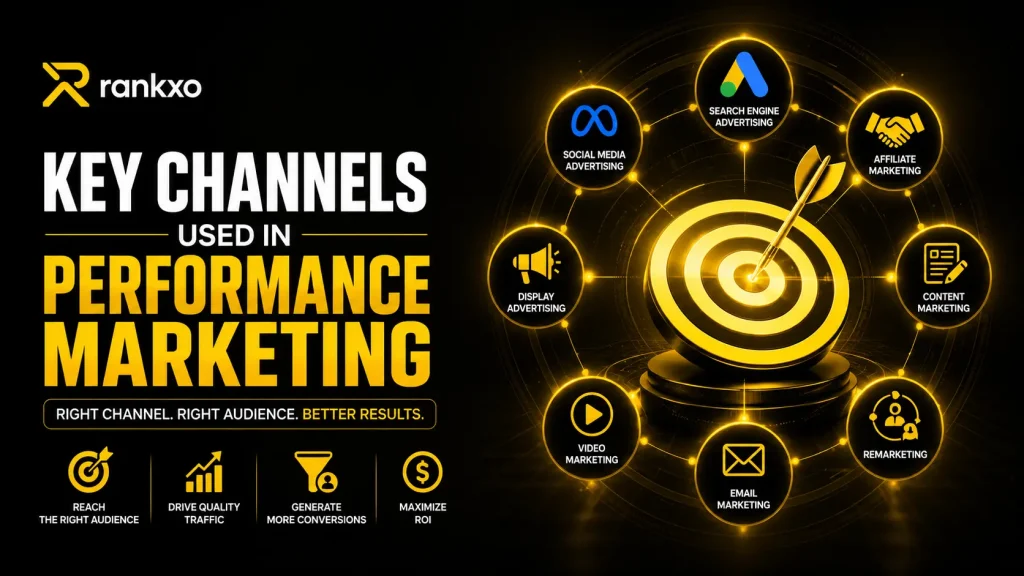
Search Engine Advertising
Paid search campaigns place ads in front of users actively searching for products or services. These campaigns often deliver high-intent traffic and measurable conversions.
Social Media Advertising
Platforms like Facebook, Instagram, LinkedIn, and TikTok allow businesses to target audiences based on demographics, interests, and behaviours while optimising for conversions.
Affiliate Marketing
Publishers promote products in exchange for commissions generated through verified sales or leads.
Native Advertising
Native ads blend naturally into content experiences, increasing engagement while maintaining relevance for users.
Display Advertising
Banner advertisements across websites help businesses retarget visitors and increase brand visibility while supporting conversion-focused campaigns.
Email Marketing Automation
Well-designed email sequences nurture leads, encourage repeat purchases, and improve customer lifetime value.
Also Read: Importance of Digital Marketing in 2026
Top Performance Marketing Strategies
Now it’s time to learn about the Best Performance marketing strategies that are 100% working in 2026. These strategies will give you the best market exposure to how this marketing technique is getting more advance everyday. Hence, every beginner should learn all these tactics before entering this field.
Set Clear Campaign Objectives
Define whether the goal is sales, qualified leads, app downloads, subscriptions, or website traffic before launching campaigns.
Understand Your Audience
Successful Performance Marketing depends on detailed audience research, including demographics, behaviours, purchase intent, and customer pain points.
Build High-Converting Landing Pages
Relevant messaging, compelling calls to action, trust signals, and mobile-friendly design significantly improve conversion rates.
Use A/B Testing
Continuously test headlines, creatives, CTAs, audiences, and landing pages to identify the highest-performing combinations.
Optimise Budget Allocation
Shift spending toward campaigns producing stronger returns while reducing investment in underperforming channels.
Leverage Remarketing
Reconnect with previous visitors who did not convert by serving personalised ads across multiple platforms.
Monitor Analytics Daily
Regular analysis helps marketers identify opportunities, solve problems quickly, and improve campaign efficiency.
Essential KPIs and Metrics to Track
Performance Marketing relies heavily on measurable indicators, including:
- Cost Per Click (CPC)
- Cost Per Acquisition (CPA)
- Click-Through Rate (CTR)
- Conversion Rate
- Return on Ad Spend (ROAS)
- Customer Acquisition Cost (CAC)
- Customer Lifetime Value (CLV)
- Revenue Generated
- Impressions
- Engagement Rate
Tracking these metrics consistently enables smarter optimisation decisions.
Best Tools for Performance Marketing

Professional marketers often use specialised tools to monitor campaigns and improve results:
- Google Analytics
- Google Ads
- Meta Ads Manager
- Google Tag Manager
- Looker Studio
- HubSpot
- Semrush
- Ahrefs
- Hotjar
- Microsoft Clarity
Choosing the right combination depends on campaign objectives and business size.
Also Read: 5 Best tips to make a blog SEO friendly in 2026
Common Performance Marketing Mistakes to Avoid
Even experienced marketers can make costly mistakes.
Avoid these common issues:
- Ignoring audience research
- Tracking vanity metrics instead of business outcomes
- Sending traffic to poor landing pages
- Running campaigns without conversion tracking
- Failing to test creatives regularly
- Scaling budgets too quickly
- Overlooking mobile optimization
- Neglecting remarketing opportunities
- Making decisions based on insufficient data
Consistent optimisation is the key to long-term success.
SEO vs Performance Marketing
Although they complement each other, SEO and Performance Marketing serve different purposes.
SEO focuses on earning organic visibility over time, while Performance Marketing delivers immediate, measurable results through paid channels.
The strongest growth strategies often combine both approaches:
- SEO builds long-term authority and sustainable traffic.
- Performance Marketing generates rapid leads, sales, and testing opportunities.
Businesses that integrate both can create balanced acquisition strategies.
Future Trends in Performance Marketing
The industry continues to evolve rapidly. Important trends include:
- AI-powered campaign optimization
- First-party data strategies
- Privacy-focused advertising
- Predictive analytics
- Automation in bidding systems
- Creative personalization
- Omnichannel attribution models
- Enhanced conversion tracking
- Server-side tagging
- Machine learning-driven audience segmentation
Staying current with these developments helps marketers remain competitive.
Also Read: Affiliate Marketing Versus Drop Shipping
Final Thoughts
Performance Marketing has transformed how businesses approach advertising by replacing guesswork with measurable outcomes. From paid search and social media campaigns to affiliate partnerships and remarketing, every tactic can be tracked and optimised for better results.
Success requires clear objectives, reliable data, continuous testing, and customer-focused experiences. Organisations that embrace Performance Marketing alongside strong content and SEO strategies are well-positioned for sustainable growth in an increasingly competitive digital environment.
About the Author
Uttam Sharma is the founder of RankXO, a digital marketing platform focused on helping businesses grow through SEO, performance marketing, content strategy, and paid advertising. With hands-on experience in building online visibility and driving measurable results, Uttam specialises in creating data-driven marketing campaigns that turn traffic into leads and customers.
Frequently Asked Questions (FAQs)
1. What is Performance Marketing?
Performance Marketing is a digital advertising approach where businesses pay based on measurable actions such as clicks, leads, or sales.
2. Is Performance Marketing suitable for small businesses?
Yes. It allows businesses of all sizes to manage budgets efficiently while tracking measurable results.
3. What is the difference between SEO and Performance Marketing?
SEO focuses on organic visibility, whereas Performance Marketing relies on paid campaigns optimised for measurable outcomes.
4. Which platforms are best for Performance Marketing?
Google Ads, Meta Ads, LinkedIn Ads, affiliate networks, and other paid advertising platforms are commonly used.
5. What metrics matter most?
CPA, ROAS, CTR, conversion rate, customer acquisition cost, and revenue are among the most important KPIs.
6. How quickly can campaigns produce results?
Many campaigns begin generating data immediately after launch, though optimisation usually improves performance over time.
7. Is A/B testing necessary?
Yes. Testing creatives, headlines, and landing pages is essential for maximising efficiency and conversions.
8. Can Performance Marketing improve ROI?
When campaigns are properly managed and optimised, it often leads to stronger returns compared with untargeted advertising.
9. Does Performance Marketing only involve paid ads?
No. It can also include affiliate partnerships and other measurable, outcome-based promotional strategies.
10. What are the most common mistakes beginners make?
Poor targeting, weak landing pages, inadequate tracking, and failing to analyse campaign data are among the most common errors.